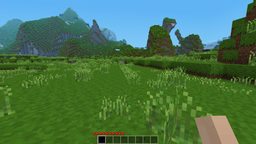
Played sessions
Testing is done with Walnut's rating tool (walnut-rate, on the console): how ratings are made and submitted.
Same in every session: Walnut 0.1
| Date | Launcher | Game build | Platform builds that differ | Rules | Play | Ended | Picture | |
|---|---|---|---|---|---|---|---|---|
| 2026-10-29 | Luanti | luanti 5.15.2+dfsg-2+ps3.1124~dev20261029153146 | Linux kernel 6.12.111+ps3.874 Mesa 26.2.4-1+ps3.924 ps3rsx 0.924+k6.12.111+ps3.874 |
2.3 | 11 min | quit | ok | Details |
| 2026-10-24 | Luanti | luanti 5.15.2+dfsg-2+ps3.786 | Linux kernel 6.12.111+ps3.747 Mesa 26.2.4-1+ps3.721 ps3rsx 0.735+k6.12.111+ps3.747 |
1.0 | 8 min | quit | ok | Details |
Download all sessions as CSV (one row per session, the aspects as columns)
Rating history
The rating on each version it was tested on, newest first: each row is rated from that version's sessions alone, under the newest rules those sessions have the data for.
Scripted benchmarks
Not rated: tests of driver and game changes. A script plays the same scene on the PS3 again and again (the desktop stopped, vsync off) to compare two builds of the game or of the graphics driver. The numbers say which build is faster; they never feed the medal.
How the script plays it: Luanti 5.15.2 with Minetest Game: a fixed flight over terrain generated from a fixed seed.
The recipe's full description
Luanti 5.15.2 (our build, LuaJIT, ppc64) with Minetest Game (luanti-game-minetest): a fixed flight over terrain generated from a fixed seed. A server-side mod can't count frames, so the world mod ps3bench (assets/luanti-ps3bench) only makes every run the same: it holds the player at the start for 15 s while the first blocks are generated and meshed, logs "ps3bench: path start", flies 45 s (240 nodes north looking down, then a full turn), logs "ps3bench: path end" and shuts the game down. fps from the Gallium HUD from the "path start" line (the load time includes the 15 s hold; parse prints joined=, Luanti's own stamps from its first log line to the join). Steady state: the path is flown 4 times (ps3bench_loops; the mod logs "path loop K"), 180 s after the hold. WARMUP=45 from "path start": the hold and the first loop (60 s after joining, the fresh world's first terrain generated) don't count; the HUD window is loops 2-4 (MEASURE=135), the same terrain flown again (generated by then; blocks the server or client unloaded come back). World and config live in /var/tmp/ps3-bench/luanti (the player's ~/.minetest worlds and minetest.conf are untouched). The world is made new for every run, so each run generates the same terrain (mapgen CPU time counts, as for a player exploring); variant saved keeps the last map. The mod also logs the process's memory every 5 s; parse() turns it into mem_* keys (KiB). The other variants (below) change one memory or load-stall lever each; the game's technical.md has the reasoning, the sizes assumed for each, and the measurements.
57 variants of the recipe
base stands for the game | the recipe as it is, without a variant |
|---|---|
saved | the map from the previous run: loaded from disk instead of generated |
nopp | post-processing off (on by default: the scene goes through an FBO) |
mip | mipmapping on (off by default): Mesa generates the levels on the GPU |
chunk3 | Mapgen. The built-in server generates a whole chunk at a time (chunksize 5 = 80^3 nodes) inside a voxel manipulator that is one block larger on every side (7^3 blocks: 5.6 MB of nodes, 1.4 MB of flags, 343 MapBlocks of 16 KB created in the map), with v7's two 3D noises kept for good (2 x 4.2 MB) and the cave noises made and freed per chunk (2 x 4.2 MB): ~30 MB at the peak, all touched for every chunk. chunksize 3 (48^3) is ~8 MB. A world-creation setting (a new world here): the terrain's shape is the same, trees and ores near chunk borders differ; the border is a bigger share of each chunk (5^3 blocks processed per 3^3 instead of 7^3 per 5^3), so generation costs more CPU per node. |
srvunload | The server keeps a block 29 s after the last time it was wanted (generated chunks include blocks nobody is sent: out of view, air, underground) and saves it on unloading. 8 s keeps what the flight is still using (the active and send ranges refresh the timer). |
active2 | Blocks within active_block_range (default 4: 9^3 = 729 blocks) are loaded from the database and kept alive for ABMs and mobs; 2 is 5^3 = 125 (Luanti's own Android default). |
gen3 | Generate no further than 3 blocks (48 nodes) from the player; blocks beyond that are sent only when they already exist (chunks generated whole still reach ~4 blocks further). Far terrain appears later or only as the player comes closer: watch for gaps at the edge of the view. |
io | Save less often and without a full fsync per commit (sqlite_synchronous 1 = NORMAL, Android's value, instead of FULL; map_save_interval 15 s instead of 5.3). The PS3's disk takes one command at a time, so a world save can hold up page faults. |
cliunload | Client map. The client keeps every block it was sent that is within the view range of the camera (all around, not only the frustum) and the others for client_unload_unused_data_timeout (600 s) up to client_mapblock_limit (7500 blocks, "about 120 MB" says the source) or the number of blocks in a view-range sphere, whichever is larger (3600 at the default range 190, 268 at 60): a 45 s flight cannot show this, a 10 minute session can. 15 s makes the flight drop what it left behind (about 60 nodes behind after ~9 s) and so shows the saving; blocks seen again are re-sent. |
leaves | Every block's mesh is kept twice: S3DVertex (36 B, 4 per quad) and u16 indices in Irrlicht's CPU buffer, and the VBO. Fancy leaves draw every face between leaf nodes; simple draws only the outer ones (Android's default). Changes the look of trees. |
tradeoff | smooth_lighting asks for 26 neighbours to be re-meshed whenever a block arrives, 6 without it (performance_tradeoffs keeps the lighting and re-meshes 6; edges may be wrong for a moment). |
flatlight | - |
nominimap | The minimap thread, its per-block copy (2 KB a block) and the mesh thread's scan for it. |
view40 | Fewer blocks everywhere (about the square of the range): 40 and 90 around the 60 of the base. |
view90 | - |
view120 | - |
view190 | - |
nomerge | Stalls while blocks arrive. renderMap merges every mesh buffer of under 300 vertices of the visible blocks into new buffers (copy, new VBO with EHM_STREAM), cached by the exact set of buffers: while blocks arrive or the camera turns the set changes and the merge is redone, with VBOs of up to 65535 vertices (2.3 MB) created and destroyed, in a driver and memory where both are expensive. 0 turns it off (more draw calls); 100 merges only the smallest. |
merge100 | - |
meshdelay | The mesh thread sleeps this many ms after each mesh ("reduces jitter on slower clients"): leaves the two hardware threads to the renderer and the server while blocks arrive. |
meshchunk2 | One mesh and one buffer set per 2^3 blocks: an eighth of the VBOs and draw calls, but a block arriving re-meshes eight. |
noraycull | Occlusion culling by raycasts in the render thread, every time the draw list is rebuilt. |
prof | Luanti's own profiler (the F6 numbers: updateDrawList, renderMap's collecting and drawing, merged buffers and their cache hit rate, blocks drawn, mesh queue) printed every 5 s into a log file at info level on the disk ($LU_DIR, not the run directory in RAM), gzipped into the run directory as luanti-debug.txt.gz after the run. For a diagnosis, not for fps: info level logs more. |
v120prof | - |
v120nice | - |
v120srv10 | the server dropping blocks it has not used for 10 s instead of 29 (4128 server blocks in memory at 120, about half the heap): less to swap, more blocks loaded again from the world database. luanti 0011 (ps3.1125 on) makes 10 the default: v120srv29 is its off-switch, v120old both 0010's and 0011's (the game as ps3.1123 ran it), v120srv5 a shorter timeout still |
v120srv29 | - |
v120srv5 | - |
v120old | - |
v120nonice | luanti 0010 (ps3.1124 on) sets nice 10 inside the engine (LU_NICE, default 10): v120nonice is the game as before it, the off-switch for the same-boot A/B |
v120mesh2 | two mesh threads instead of one (Luanti's automatic count is a quarter of the CPUs, at least 1) |
malloc | glibc's malloc. Threads have their own arenas, and a freed block inside one stays resident: dirty garbage the kernel swaps out. The mapgen's 2-8 MB arrays, the voxel manipulator and the mesh vectors are above the 128 KB mmap threshold only until the first big free raises it (up to 32 MB); with the threshold fixed they are mmapped and returned when freed. Luanti's own malloc_trim() (porting.cpp) waits until 256 MB were freed in all. Environment only, no rebuild. |
trim16 | Luanti's own malloc_trim() threshold (our luanti 0007, LU_TRIM_MB; 256 MB freed by default): the MEM=1 profile of 2026-10-18 had 23-28 MB free inside the arenas (18-22 MB in one thread arena), resident or swapped out (docs/MEMORY.md). Trims run in the emerge and mesh threads, not the renderer. The generic alternative for every game is run.sh MALLOC=trim (ps3-malloctrim.so). |
trim64 | - |
lean | Combinations. lean: no change a player would notice (the view range and mapgen shape stay); leaner: also simple leaves, no minimap, no buffer merging, a mesh delay. |
leaner | - |
allbatchoff | Our luanti build's GL submission switches (gamedb/games/luanti/packages/luanti/patches 0004-0006, irr/include/LuGlOpt.h): all on in the base run, LU_GL=0 is the game as upstream draws it. On the host (llvmpipe, GL 2.1, the same flight) they take the GL calls from ~1180 to ~835 a frame and the buffer bytes uploaded from ~32 KB to ~16 KB a frame; each variant turns one off (or all, allbatchoff). |
nodupup | - |
nobind | - |
noxform | - |
noptr | - |
nofog | - |
noskin | - |
nosky | - |
nomatreuse | - |
allog | - |
b16 | - |
f44 | - |
b16f44 | - |
p1024 | - |
alnull | - |
f32 | - |
lin | - |
nosound | - |
menu | - |
freshmenu | the main menu on an empty configuration: the package's own defaults (0008 fullscreen, 0009 viewing range 60) |
One table, a header row per batch (what it tested and what came out). Conditions: what a variant adds to the recipe (its environment switches) and what ran alongside (the stall recorder, a profiler); a column appears only when this game has a value in it. Rows marked invalid or not comparable say why.
What the run length means
"warm-up + 120 s" is a steady-state run, which leaves out a 60 s warm-up and measures 120 s or more; "whole run" counted everything from the start, the way runs before 2026-10-17 did.
| Variant | Conditions | Steady fps in the window |
1% low fps |
Stalls frames over 100 ms |
fps whole run |
Build | Run length | ram free MiB | vram MiB | stall play s seconds | longest play ms ms | sound faults per min faults a minute | cpu seconds | underruns underruns | longest ms ms | stall disk s seconds | stall swap s seconds | stall reclaim s seconds | stall gpu s seconds | stall cpu s seconds |
Note |
|---|---|---|---|---|---|---|---|---|---|---|---|---|---|---|---|---|---|---|---|---|---|
Suite summary
2026-10-20 · suite-summary-2026-10
Tested: Not a test run: the suite's 13 benchmarked games (15 rows, with OpenArena's two renderers and OpenTTD's two blitters) gathered with their known numbers as of October 2026, each value naming the batch or document it came from. Result: It is the calibration of the rating formula (rules 1): the scale was tried on these numbers before any game was rated, and the GameDB calibration table is generated from it. Benchmarks never give a medal; medals come from played sessions only. | |||||||||||||||||||||
| Luanti | the recipe as it is | 46.0 | 19.1 | - | - | - | warm-up + 120 s | 19 | 63 | 3.5 | 724 | 0 | - | - | - | - | - | - | - | - | right, no underruns |
Mesa ps3.924 + kernel .874, luajit ps3.931~dev (0002), luanti ps3.1124~dev (0010, 0011 at 5 s)
2026-10-29 · 2026-10-29-luanti-shipped
Tested: The final Luanti build (0010, and 0011 at 5 s) against both patches off at viewing range 120, three rounds, plus one round with screenshots inside the measured window to check the picture. Result: Shipped: 38 against 21 fps, 1.8 against 30.9 s of stalls per 135 s, 1% low 16.7 against 4.3. The black and grey screenshots come from the flight path passing through a mountain, the same in both builds. What we saw3 rounds alternating, same boot, stall recorder on, every run fullscreen 1920x1080, no interference.
| |||||||||||||||||||||
v120old |
LU_NICE=0 stall recorder at 10 ms |
21 | 4.3 | 185 | 24 | - | warm-up + 120 s | 11.8 | 83.7 | 30.9 | 1409.0 | - | 314.3 | 0 | 1409.0 | 0.9 | 8.2 | 0.5 | 0 | 21.6 | |
v120old |
LU_NICE=0 stall recorder at 10 ms screenshots in the window |
20 | 4.0 | 201 | 23 | - | warm-up + 120 s | 13.2 | 78.6 | 37.1 | 1453.0 | - | 311.9 | 0 | 1453.0 | 1.1 | 9.9 | 1.1 | 0 | 23.2 | |
view120 |
stall recorder at 10 ms | 38 | 16.7 | 14 | 41 | - | warm-up + 120 s | 12.3 | 70.0 | 1.8 | 209.8 | - | 326.2 | 0 | 209.8 | 0.1 | 0.1 | 0.0 | 0.0 | 1.5 | |
view120 |
stall recorder at 10 ms screenshots in the window |
34 | 13.1 | 24 | 38 | - | warm-up + 120 s | 16.4 | 69.3 | 5.0 | 819.7 | - | 318.5 | 0 | 819.7 | 0.1 | 0.6 | 0.2 | 0.0 | 2.4 | |
Mesa ps3.924 + kernel .874, luajit ps3.931~dev (0002), luanti ps3.1124~dev (0010, 0011 at 10 s)
2026-10-29 · 2026-10-29-luanti-srvunload
Tested: luanti 0010 with 0011 (the built-in server unloads map blocks unused for 10 s instead of 29) against the game as it was, against 0011 off, and against a 5 s timeout; three rounds at viewing range 120. Result: Both patches together took the game from 21 to 34 fps and its stalls from 31.6 to 3.8 s per 135 s. A 5 s timeout was better still (38 fps, 1.2 s of stalls), so 0011's default became 5 s. What we saw3 rounds alternating, same boot, stall recorder on. The screenshot was moved into the warm-up at 30 s, because a capture costs 1-3 s of stalls at this load.
| |||||||||||||||||||||
v120old |
LU_NICE=0 stall recorder at 10 ms |
21 | 4.7 | 175 | 25 | - | warm-up + 120 s | 10.6 | 80.8 | 31.6 | 1426.0 | - | 310.4 | 0 | 1426.0 | 0.6 | 7.5 | 0.4 | 0.0 | 21.7 | |
v120srv29 |
stall recorder at 10 ms | 31.0 | 8.9 | 56.0 | 35.5 | - | warm-up + 120 s | 11.3 | 81.9 | 9.3 | 784.1 | - | 312.9 | 0.0 | 784.1 | 0.4 | 2.4 | 0.3 | 0.1 | 6.0 | |
v120srv5 |
stall recorder at 10 ms | 38 | 16.9 | 8 | 40 | - | warm-up + 120 s | 14.2 | 70.4 | 1.2 | 345.2 | - | 327.7 | 0 | 345.2 | 0.1 | 0.1 | 0.0 | 0.0 | 1.0 | |
view120 |
stall recorder at 10 ms | 34 | 13.2 | 25 | 37 | - | warm-up + 120 s | 12.4 | 74.2 | 3.8 | 236.2 | - | 322.6 | 0 | 236.2 | 0.0 | 0.5 | 0.1 | 0 | 2.6 | |
Mesa ps3.924 + kernel .874, luajit ps3.931~dev (0002), luanti ps3.1124~dev (0010: background threads at nice 10)
2026-10-29 · 2026-10-29-luanti-nice
Tested: luanti 0010 (the engine itself puts its background threads at nice 10) against the switch off, plus two variants: two mesh threads, and the built-in server unloading map blocks after 10 s instead of 29; three rounds at viewing range 120. Result: 0010 matches the outside renice: 30 against 20 fps and 10.7 against 30.1 s of stalls. Two mesh threads are worse. Unloading blocks after 10 s was the best (35 fps, 5.3 s of stalls, less swap) and became patch 0011. What we saw3 rounds alternating, same boot, stall recorder on, every run fullscreen 1920x1080, no interference, the world drawn in every 100 s screenshot.
| |||||||||||||||||||||
v120mesh2 |
stall recorder at 10 ms screenshots in the window |
28 | 7.1 | 78 | 31 | - | warm-up + 120 s | 12.0 | 80.8 | 12.8 | 795.9 | - | 309.6 | 0 | 795.9 | 0.2 | 2.8 | 0.0 | 0.0 | 9.4 | |
v120nonice |
LU_NICE=0 stall recorder at 10 ms screenshots in the window |
20 | 4.2 | 177 | 23 | - | warm-up + 120 s | 11.6 | 83.8 | 30.1 | 1218.0 | - | 312.8 | 0 | 1218.0 | 0.4 | 5.8 | 0.5 | 0.0 | 22.3 | |
v120srv10 |
stall recorder at 10 ms screenshots in the window |
35 | 11.1 | 33 | 38 | - | warm-up + 120 s | 14.3 | 71.6 | 5.3 | 546.4 | - | 320.9 | 0 | 546.4 | 0.1 | 0.7 | 0.3 | 0.0 | 3.4 | |
view120 |
stall recorder at 10 ms screenshots in the window |
30 | 8.5 | 65 | 34 | - | warm-up + 120 s | 10.7 | 80.4 | 10.7 | 516.4 | - | 306.3 | 0 | 516.4 | 0.2 | 2.1 | 0.9 | 0.0 | 7.3 | |
Mesa ps3.924 + kernel .874, luajit ps3.931~dev (0002), luanti ps3.1123, background threads reniced
2026-10-29 · 2026-10-29-luanti-renice
Tested: Why Luanti stalls at viewing range 120: two profiled runs to see which threads hold the CPU in the stall frames, then the background threads lowered to nice 10 from outside against the plain game, three runs each. Result: The main thread was starved: it ran only 22% of its stall frames while the mesh, map generation and server threads and the kernel's swapper held the two PPE threads. Lowering those threads' priority took the game from 20 to 30 fps and its stalls from 35.1 to 10.2 s per 135 s; this went into the engine next as luanti 0010. What we saw
| |||||||||||||||||||||
v120nice |
stall recorder at 10 ms screenshots in the window |
30 | 8.4 | 66 | 34 | - | warm-up + 120 s | 10.8 | 79.3 | 10.2 | 811.3 | - | 313.4 | 0 | 811.3 | 0.2 | 2.1 | 0.0 | 0 | 8.1 | |
v120prof |
stall recorder at 10 ms perf recording screenshots in the window |
14 | 2.1 | 242 | 19 | - | warm-up + 120 s | 18.9 | 79.0 | 58.7 | 2669.0 | - | 299.9 | 0 | 2669.0 | 1.4 | 17.3 | 11.1 | 0 | 25.5 | |
view120 |
stall recorder at 10 ms perf recording screenshots in the window |
14 | 3.2 | 307 | 17 | - | warm-up + 120 s | 15.2 | 80.5 | 55.9 | 2017.0 | - | 298.8 | 0 | 2017.0 | 0.7 | 16.8 | 0.2 | 0 | 36.7 | |
view120 |
stall recorder at 10 ms screenshots in the window |
20 | 4.1 | 183 | 23 | - | warm-up + 120 s | 11.0 | 83.6 | 35.1 | 1937.0 | - | 309.2 | 0 | 1937.0 | 0.7 | 9.3 | 0.2 | 0 | 23.3 | |
Mesa ps3.924 + kernel .874, luajit ps3.931~dev (0002), luanti ps3.1025
2026-10-29 · 2026-10-29-luanti-view120
Tested: Luanti at viewing range 120, the lowest the user accepts, against 60: three runs at 120 and one at 60, as the starting point for the smoothness work. Result: 120 gives 20 fps with 36 s of long frames in 135 s, against 46 fps and 4.5 s at 60. The package's default became 120 (patch 0009), and the stall work started from these numbers. What we sawSame boot, stall recorder on, every run fullscreen 1920x1080, no interference, only system services running beforehand.
| |||||||||||||||||||||
base |
stall recorder at 10 ms screenshots in the window |
46 | 16.8 | 30 | 47 | - | warm-up + 120 s | 11.7 | 61.1 | 4.5 | 500.5 | - | 254.8 | 0 | 500.5 | 0.2 | 0.1 | 1.0 | 0 | 2.9 | |
view120 |
stall recorder at 10 ms screenshots in the window |
20 | 4.0 | 203 | 24 | - | warm-up + 120 s | 12.3 | 81.4 | 36.2 | 1602.0 | - | 309.0 | 0 | 1602.0 | 0.5 | 9.4 | 0.4 | 0.0 | 25.4 | |
Mesa ps3.924 + kernel .874, luajit ps3.931~dev (0002)
2026-10-28 · 2026-10-28-luanti-view190
Tested: How Luanti runs at its own default viewing range of 190 against the benchmark's 60, one run each; the played session of 2026-10-24 had used 190. Result: Far worse at 190: 15 fps with 56 s of long frames in 135 s, against 46 fps and 2.3 s at 60. The package's default became 60 on these numbers (later raised to 120, the user's floor). What we sawOne run each, same boot, stall recorder on.
| |||||||||||||||||||||
base |
stall recorder at 10 ms | 46 | 18.0 | 14 | 46 | - | warm-up + 120 s | 21.2 | 61.0 | 2.3 | 272.8 | - | 249.4 | 0 | 272.8 | 0.1 | 0.1 | 0.0 | 0 | 2.0 | |
view190 |
stall recorder at 10 ms | 15 | 3.0 | 318 | 18 | - | warm-up + 120 s | 10.6 | 90.5 | 55.8 | 641.8 | - | 311.9 | 0 | 641.8 | 0.5 | 13.2 | 0.2 | 0 | 41.0 | |
RT mixer: RTPRIO=10 against RTPRIO=0 (OpenAL's mixer on SCHED_RR) on OpenArena, Yamagi Quake II and Luanti base x3 (kernel .874)
2026-10-28 · 2026-10-28-rtprio-openal
Tested: Whether letting OpenAL's mixer thread run at real-time priority (SCHED_RR, allowed by a priority limit of 10) prevents sound dropouts in OpenArena, Yamagi Quake II and Luanti, three rounds. Result: No gain: there were no audible dropouts with or without it, and it cost a little frame rate. Not shipped. What we saw18 runs, rounds alternating the order, none interfered. Every run fullscreen at 1920x1080, with a screenshot 40 s after the load.
| |||||||||||||||||||||
base |
real-time priority 0 | 46 | 19.8 | 10 | 47 | - | warm-up + 120 s | - | - | 4.1 | 1764.0 | - | 254.9 | 0 | 1764.0 | - | - | - | - | - | |
base |
real-time priority 10 | 45 | 20.9 | 8 | 46 | - | warm-up + 120 s | - | - | 2.6 | 1022.0 | - | 252.1 | 0 | 1022.0 | - | - | - | - | - | |
batch ssdroot8 Mesa 0038 force-DXT on the rest of the suite: Luanti and ClassiCube off/opaque/opaque+NEAREST, OpenArena gl2min and gl2min_tc0 off/opaque, SuperTuxKart lean opaque/all (SSD root .472 Mesa ps3.545~dev)
2026-10-20 · 2026-10-20-ssdroot8-force-dxt
Tested: Whether Mesa 0038's forced texture compression (opaque textures to DXT1, or every texture with 'all') saves VRAM in the rest of the suite: Luanti, ClassiCube, OpenArena and SuperTuxKart. Result: Only SuperTuxKart with 'all' changed anything: 182 textures went to DXT5 and peak VRAM fell from 95.5 to 58.1 MiB (-39%) at the same frame rate, with no difference visible on the webcam. The other games compressed nothing, because their uploads are empty textures filled later, small, or in formats the switch skips. No decision recorded; the user has the last word on the picture. What we saw24 runs, compression statistics on in every arm, none interfered, webcam picture right in all.
| |||||||||||||||||||||
base |
stall recorder at 10 ms switch force_dxt_stats50 |
46.5 | 17.4 | 17.5 | 46.5 | Kernel ps3.472, Mesa ps3.545~dev | warm-up + 120 s | 23.2 | 62.4 | 3.2 | 370.9 | - | 245.7 | 0.0 | 370.9 | 0.1 | 0.2 | 1.4 | 0.0 | 1.5 | |
base |
stall recorder at 10 ms switch force_dxtopaque_force_dxt_nearest1_force_dxt_stats50 |
46.0 | 16.4 | 20.5 | 46.5 | Kernel ps3.472, Mesa ps3.545~dev | warm-up + 120 s | 23.0 | 62.0 | 3.9 | 486.9 | - | 241.9 | 0.0 | 486.9 | 0.2 | 0.5 | 1.3 | 0.0 | 1.8 | |
base |
stall recorder at 10 ms switch force_dxtopaque_force_dxt_stats50 |
46.0 | 17.1 | 17.5 | 46.5 | Kernel ps3.472, Mesa ps3.545~dev | warm-up + 120 s | 21.1 | 60.9 | 3.3 | 459.3 | - | 243.0 | 0.0 | 459.3 | 0.1 | 0.2 | 1.5 | 0.0 | 1.4 | |
batch ssdroot2 P1b: gameplay profiles on the SSD root (PERF=1 MEM=1 x1)
2026-10-19 · 2026-10-19-ssdroot2-gameplay-profiles
Tested: Where the CPU goes during play in seven games on the SSD root, profiled with perf over the measured window. Result: Mesa is the biggest share in BananaBread (62.8%) and ClassiCube, the game itself in SuperTuxKart, OpenArena and Luanti, and OpenTTD spends half its time in the kernel. Profiled runs, not for frame rates; OpenTTD was profiled at its title screen, not in play. What we saw
not comparable gameplay profiles (PERF=1 MEM=1), slower than plain runs. | |||||||||||||||||||||
basenot comparable |
perf recording | 46 | 15.7 | 24 | 46 | - | warm-up + 120 s | 18.2 | 61.1 | 5.2 | 491.3 | - | 253.3 | 0 | 491.3 | - | - | - | - | - | |
batch ssdroot2 P1a: start-up profiles on the SSD root (PERF_LOAD=1 STALLS=1 x1)
2026-10-19 · 2026-10-19-ssdroot2-startup-profiles
Tested: Where the start-up time goes now that the system runs from the SSD: one profiled start of each of five games, from a cold cache. Result: Loads are 39-61% shorter than on USB and are now mostly CPU work on the main thread (47-77%), with the disk only 13-26%. The biggest remaining costs are named per game (map inflate, PNG and zlib decoding, Luanti's map generation). Profiled runs, not for frame rates. What we saw
not comparable start-up profiles (PERF_LOAD=1 STALLS=1), slower than plain runs. | |||||||||||||||||||||
basenot comparable |
stall recorder at 10 ms start-up profile |
46 | 20.5 | 9 | 46 | - | warm-up + 120 s | 18.4 | 63.4 | 2.3 | 541.2 | - | 253.3 | 0 | 541.2 | 0.2 | 0.4 | 1.1 | 0 | 0.7 | |
batch ssdroot1+2 A: baseline on the SSD root (kernel .472 Mesa .476 ps3rsx 0.443 ps3-gpu-tools 0.477~dev)
2026-10-19 · 2026-10-19-ssdroot1-baseline
Tested: A new baseline with the whole system running from the internal SSD instead of a USB disk, on five games, to see what it does to loads, stalls and frame rates. This console has an upgraded SSD; a stock PS3 has a hard disk. Result: Loads are 35-58% shorter (BananaBread 16.9 to 7.1 s, SuperTuxKart 53.6 to 31.1 s) and BananaBread's gameplay stalls almost vanish, while frame rates stay about the same apart from OpenArena (55.9 to 60.4). It also showed SuperTuxKart's own "Average FPS" is its physics tick rate, so its fps is taken from the HUD from here on. What we saw
| |||||||||||||||||||||
base |
stall recorder at 10 ms | 46 | 19.1 | 11 | 46 | Kernel ps3.472, Mesa ps3.476, ps3rsx 0.443 | warm-up + 120 s | 19.0 | 61.5 | 3.5 | 724.1 | - | 247.2 | 0 | 724.1 | 0.3 | 0.2 | 1.6 | 0 | 0.9 | |
batch 17: ETR uncapped, start-up profiles x5, shader cache cold/warm, OpenArena gl2 memory variants, Mesa sysmem switches, Sauerbraten shortnormals
2026-10-18 · 2026-10-18-batch17
Tested: A mixed batch: ioquake3 462's new colour path and memory variants for OpenArena's OpenGL 2 renderer, Mesa's system-memory copy switches, BananaBread's short normals, a warm shader cache, Extreme Tux Racer without a frame cap, and start-up profiles. Result: ioquake3 462 cuts OpenArena's stalls from 9-11 s to 0.7-2.6 s at 57-60 fps, Mesa's system-memory switches fix the old colour path's stalls, and BananaBread's short normals give +17%. The shader cache gives no faster loads and Extreme Tux Racer's 59 fps is not a vsync cap. What we saw
| |||||||||||||||||||||
base |
stall recorder at 10 ms start-up profile |
47 | 17.8 | 16 | 46 | - | warm-up + 120 s | 16.9 | 61.3 | 2.9 | 445.3 | - | 245.9 | 0 | 445.3 | 0.6 | 0.1 | 0.3 | 0.0 | 1.5 | |
batch 16: game prefetch A/B, idle fix on/off (433), ClassiCube chunks1, X-Moto stream, Luanti lean parts
2026-10-18 · 2026-10-18-batch16
Tested: Several checks on kernel .433: a game-data prefetch, the idle-CPU fix on and off, ClassiCube's chunk setting, X-Moto's streaming draw path, and the parts of Luanti's lean settings one at a time. Result: The prefetch gives no gain and makes Luanti worse, so it was turned off by default. The idle fix is confirmed clean (gameplay stalls 0.4 s against 8-9 s); ClassiCube's chunk setting gains 4.7% and X-Moto's streaming 1%. Luanti's chunk size 3 is what empties the world in lean. What we saw
| |||||||||||||||||||||
base |
stall recorder at 10 ms | 46 | 17.5 | 16 | 47 | - | warm-up + 120 s | 16.8 | 62.6 | 2.5 | 357.7 | - | 247.0 | 0 | 357.7 | 0.5 | 0.2 | 0.4 | 0.0 | 1.1 | |
base |
stall recorder at 10 ms switch gpffetch |
46 | 20.0 | 13 | 47 | - | warm-up + 120 s | 17.3 | 61.9 | 5.5 | 3089.0 | - | 247.3 | 0 | 3089.0 | 2.6 | 0.4 | 0.6 | 0.0 | 0.6 | |
active2 |
the recipe as it is | 46 | 18.1 | 14 | 46 | - | warm-up + 120 s | 17.8 | 59.7 | 6.7 | 2142.0 | - | 241.6 | 0 | 2142.0 | - | - | - | - | - | |
chunk3 |
the recipe as it is | 45 | 21.9 | 7 | 44 | - | warm-up + 120 s | 18.1 | 65.7 | 1.2 | 225.6 | - | 266.2 | 0 | 225.6 | - | - | - | - | - | |
srvunload |
the recipe as it is | 45 | 17.6 | 25 | 45 | - | warm-up + 120 s | 12.6 | 59.9 | 6.3 | 1025.0 | - | 279.6 | 0 | 1025.0 | - | - | - | - | - | |
Luanti ps3.405 clean re-runs (interference detector, kernel 433, kick)
2026-10-18 · 2026-10-18-luanti-clean-reruns
Tested: Clean re-runs of Luanti's base, client-unloading and lean variants, with the new interference detector, after the earlier runs were found disturbed by someone playing. Result: Base stays the default. Client-side unloading is worse (worst frames over 2 s) and lean only looks faster because it draws a black void instead of the world. What we saw
| |||||||||||||||||||||
base |
stall recorder at 10 ms waker kick at 10 ms |
45.5 | 18.4 | 12.5 | 46.0 | Kernel ps3.433 | warm-up + 120 s | 16.9 | 62.0 | 1.8 | 185.2 | - | 241.8 | 0.0 | 185.2 | 0.3 | 0.1 | 0.0 | 0.0 | 1.0 | |
cliunload |
stall recorder at 10 ms waker kick at 10 ms |
46.0 | 20.1 | 9.5 | 46.5 | Kernel ps3.433 | warm-up + 120 s | 21.0 | 58.5 | 4.5 | 2065.5 | - | 265.6 | 0.0 | 2065.5 | 2.4 | 0.1 | 0.3 | 0.0 | 0.6 | |
lean |
stall recorder at 10 ms waker kick at 10 ms |
56.5 | 22.2 | 4.0 | 57.0 | Kernel ps3.433 | warm-up + 120 s | 22.1 | 45.4 | 0.7 | 238.2 | - | 304.0 | 0.0 | 238.2 | 0.1 | 0.0 | 0.3 | 0.0 | 0.1 | |
Luanti ps3.405 memory variants + ClassiCube PERF (kick, STALLS)
2026-10-18 · 2026-10-18-luanti-memory
Tested: Luanti memory variants (lean settings, a closer view range, client-side unloading and others) for fewer stalls, and ClassiCube's batching profiled. Result: Invalid for the Luanti decisions that mattered: someone was playing during the base, lean and tradeoff runs, so those cells are void and the runs were repeated clean in a later batch. ClassiCube's batching profile shows Mesa's share falling from 57.7% to 42.8%. What we saw
| |||||||||||||||||||||
base |
stall recorder at 10 ms waker kick at 10 ms |
45 | 16.2 | 24 | 46 | - | warm-up + 120 s | 13.3 | 61.6 | 6.5 | 1943.0 | - | 254.0 | 0 | 1943.0 | 1.8 | 1.2 | 0.0 | 0.0 | 1.8 | |
cliunload |
stall recorder at 10 ms waker kick at 10 ms |
48 | 21.6 | 5 | 48 | - | warm-up + 120 s | 21.0 | 57.9 | 0.8 | 258.9 | - | 272.0 | 0 | 258.9 | 0.2 | 0 | 0.3 | 0.0 | 0.2 | |
lean |
stall recorder at 10 ms waker kick at 10 ms |
54 | 19.9 | 1 | 54 | - | warm-up + 120 s | 30.8 | 44.0 | 0.2 | 164.8 | - | 316.6 | 0 | 164.8 | 0.1 | 0.0 | 0 | 0 | 0.0 | |
nomerge |
stall recorder at 10 ms waker kick at 10 ms |
46 | 17.1 | 14 | 47 | - | warm-up + 120 s | 14.4 | 64.6 | 2.5 | 360.7 | - | 259.3 | 0 | 360.7 | 0.3 | 0.1 | 0.7 | 0.0 | 0.9 | |
tradeoff |
stall recorder at 10 ms waker kick at 10 ms |
46 | 18.4 | 21 | 47 | - | warm-up + 120 s | 12.6 | 63.5 | 6.7 | 2983.0 | - | 230.3 | 0 | 2983.0 | 2.8 | 0.6 | 1.1 | 0.0 | 1.0 | |
view40 |
stall recorder at 10 ms waker kick at 10 ms |
59 | 29.2 | 5 | 58 | - | warm-up + 120 s | 18.7 | 54.5 | 0.9 | 362.4 | - | 241.0 | 0 | 362.4 | 0.4 | 0.0 | 0.1 | 0.0 | 0.1 | |
smoke re-runs (teeworlds ps3.422) + vm.watermark_boost_factor A/B on Luanti (kick)
2026-10-18 · 2026-10-18-smoke-reruns-watermark
Tested: Re-runs of three smoke tests (Teeworlds with a big-endian fix, Red Eclipse, SuperTux) and an A/B of a kernel memory setting (watermark boost) on Luanti's stalls. Result: Teeworlds now runs and Red Eclipse no longer runs out of memory; SuperTux never left its title card. The kernel setting gave no clear gain and was not shipped. What we saw
| |||||||||||||||||||||
base |
waker kick at 10 ms | 47.0 | 21.6 | 12.0 | 47.0 | - | warm-up + 120 s | 14.2 | 62.3 | 2.0 | 321.5 | - | 247.0 | 0.0 | 321.5 | - | - | - | - | - | |
batch 8: STK lean, OpenTTD gl, ClassiCube/dsda batching, malloc presets, profiles (Mesa ps3.408, kick)
2026-10-18 · 2026-10-18-batch8
Tested: A mixed batch: SuperTuxKart's lean settings, OpenTTD's OpenGL driver, draw batching in ClassiCube and dsda-doom, memory allocator presets, and profiles of OpenArena and Luanti. Result: SuperTuxKart lean runs 21.4 fps against 13 with far fewer stalls, OpenTTD's GL driver doubles its frame rate, dsda-doom's batching gains 3% while ClassiCube's loses 4%, and the allocator presets were noise. One Luanti profiling run was disturbed by a mouse click. What we saw
| |||||||||||||||||||||
base |
waker kick at 10 ms perf recording |
46 | 15.4 | 31 | 47 | Mesa ps3.408 | warm-up + 120 s | 20.6 | 61.6 | 10.4 | 2763.0 | - | 246.5 | 0 | 2763.0 | - | - | - | - | - | |
Mesa ps3.407 NV30_TRANSLATE_LUT, yquake2 ps3.408 kiss4k, luanti ps3.405 trim16 (all with WAKER kick)
2026-10-18 · 2026-10-18-mesa-407-lut
Tested: Three changes: Mesa ps3.407's lookup table for 8-bit vertex attributes on BananaBread, Yamagi Quake II's memory cut (kiss4k) and Luanti's trim16 setting. Result: The lookup table speeds BananaBread up by 53%, and Yamagi's memory cut ends its stalls (22.6 s to 0.05 s). Luanti's trim16 gave no gain and more stalls, so it was rejected. What we saw
| |||||||||||||||||||||
base |
waker kick at 10 ms | 47.0 | 20.3 | 15.5 | 47.5 | Mesa ps3.407 | warm-up + 120 s | 15.8 | 62.9 | 3.4 | 425.4 | - | 250.7 | 0.0 | 425.4 | - | - | - | - | - | |
trim16 |
LU_TRIM_MB=16 waker kick at 10 ms |
47.5 | 20.6 | 11.0 | 48.0 | Mesa ps3.407 | warm-up + 120 s | 15.9 | 61.0 | 8.6 | 3648.0 | - | 246.1 | 0.0 | 3648.0 | - | - | - | - | - | |
Luanti ps3.364 batching, Neverball ps3.370 batching, Sauerbraten libspeq 0.381 skinning (spawn)
2026-10-17 · 2026-10-17-luanti-neverball-batching
Tested: Draw batching in our Luanti (ps3.364) and Neverball (ps3.370) packages against the old drawing, and BananaBread's model skinning on the SPUs, on the PPE through libspeq, or off (libspeq 0.381). Result: Batching gives Luanti fewer stalls and shorter worst frames, and cuts Neverball's CPU from 80 to 65 s at the same frame rate. For BananaBread libspeq's PPE skinning is best; the SPU path adds hitches. One Luanti batching-off run was later found disturbed by input. What we saw
| |||||||||||||||||||||
base |
the recipe as it is | 45.0 | 18.9 | 20.0 | 45.5 | - | warm-up + 120 s | 15.1 | 62.5 | - | - | - | 246.1 | 0.0 | 1685.1 | - | - | - | - | - | |
allbatchoff |
LU_GL=0 | 46.0 | 17.5 | 26.5 | 46.0 | - | warm-up + 120 s | 16.8 | 61.5 | - | - | - | 241.6 | 0.0 | 3415.0 | - | - | - | - | - | |
Mesa ps3.262 OpenAL log variants (allog; perf recording)
2026-10-17 · 2026-10-17-mesa-262-allog
Tested: How much of the CPU OpenAL's sound mixing takes in four games, profiled with perf, to see whether moving the mixer to the SPUs would pay off. Result: OpenAL itself is 3.7-4.7% of the game's CPU samples, under the 6% bar set for an SPU mixer. The frame rates are slowed by the profiler and are not for comparison. What we saw
not comparable OpenAL logging runs with perf recording, slower than plain runs. | |||||||||||||||||||||
allognot comparable |
the recipe as it is | - | - | - | 58 | Mesa ps3.262 | whole run | 21.0 | 53.0 | - | - | - | 115.7 | 0 | - | - | - | - | - | - | |
Mesa ps3.262 + ps3rsx 0.249
2026-10-17 · 2026-10-17-mesa-262
Tested: Mesa ps3.262 (patches 0019 to 0025: fewer words sent to the GPU per draw) across the suite, against ps3.246. Result: Big gains in several games: OpenArena +23%, Yamagi +24%, X-Moto +21%, Extreme Tux Racer and dsda-doom +15%. Armagetron fell from 60 to 51 fps, which the next batches traced. Single runs; BananaBread's drop is a memory stall, not a driver number. What we saw
| |||||||||||||||||||||
base |
the recipe as it is | - | - | - | 53 | Mesa ps3.262, ps3rsx 0.249 | whole run | 16.7 | 52.4 | - | - | - | 117.2 | 0 | - | - | - | - | - | - | |
Mesa ps3.246 + ps3rsx 0.249
2026-10-17 · 2026-10-17-mesa-246-ps3rsx-249
Tested: The first full suite round after the reboot into ps3rsx 0.249, one run per game, as a baseline. Result: Every game ran with the right picture. The sound was right except in dsda-doom (MIDI music), BananaBread and OpenTTD. Single runs, so differences of a few fps are noise. What we saw
| |||||||||||||||||||||
base |
the recipe as it is | - | - | - | 53 | Mesa ps3.246, ps3rsx 0.249 | whole run | 27.1 | 53.6 | - | - | - | 105.3 | 0 | - | - | - | - | - | - | |
ps3rsx 0.249 first boot (Mesa ps3.246; SDL3 ps3.254)
2026-10-17 · 2026-10-17-ps3rsx-249-first-boot
Tested: The first boot with ps3rsx 0.249 and libsdl3 ps3.254: Neverball without the wedge, OpenTTD's native upload, and the first runs of Luanti and BananaBread (the Cube 2 engine). Result: Neverball runs without wedging (76.4 and 70.2 fps), and OpenTTD rose from about 2 to 8 fps (12 with the 8-bit blitter). Luanti and BananaBread run but are memory-bound; BananaBread's first run was killed for lack of memory. What we saw
| |||||||||||||||||||||
base |
the recipe as it is | - | - | - | 67 | Mesa ps3.246, ps3rsx 0.249 | whole run | 31.4 | 48.9 | - | - | - | 92.3 | 0 | - | - | - | - | - | - | |